
Metals, Fuels, & Flows
Follow the Flows, Not the Headlines
The Red Sea Trap: The World’s search for the Backdoor
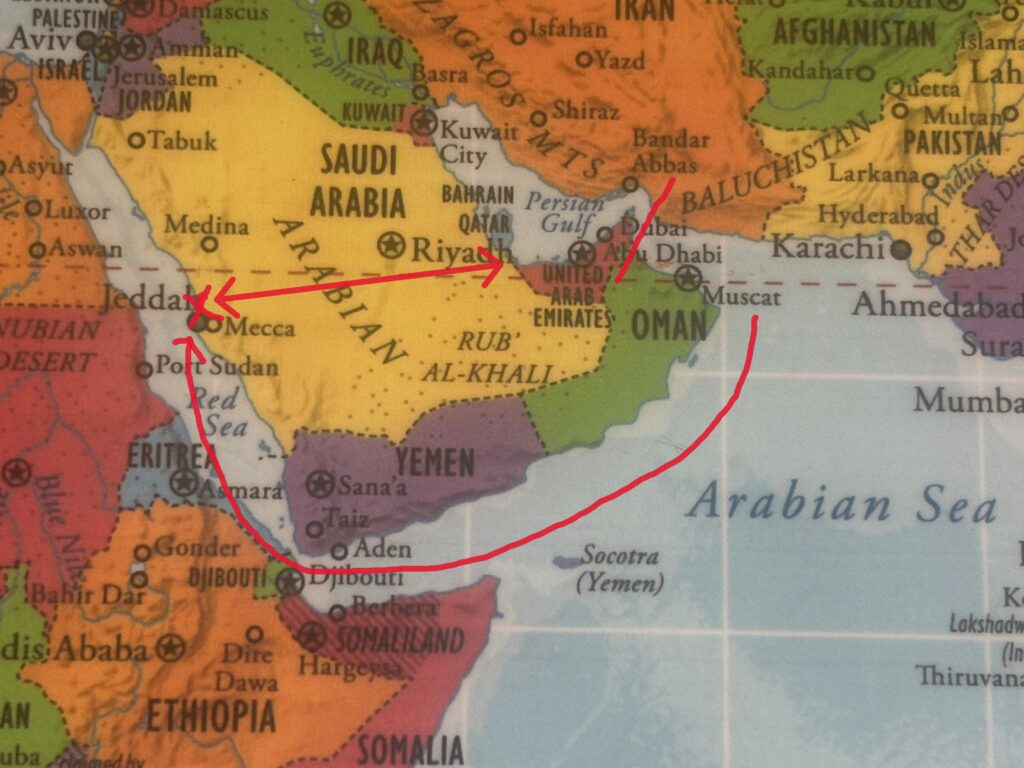
Pipeline vs. Port a Mismatch
Saudi Arabia is desperate to keep its refineries running and its exports alive. The kingdom does have one backdoor — the East–West Pipeline — a system that normally moves about five million barrels per day but can be forced toward seven million in an emergency. The numbers sound promising until the crude reaches Yanbu. That’s where the mismatch hits: pipeline capacity versus loading capacity. Yanbu can load at most about three million barrels per day — and that ceiling is already maxed. This is where the next backup begins. A VLCC, too large for the Suez Canal, needs roughly a full day at berth to take on its cargo. One tanker a day won’t clear the traffic jam — it barely keeps the line from growing.
The Red Sea Backdoor Isn’t a Door
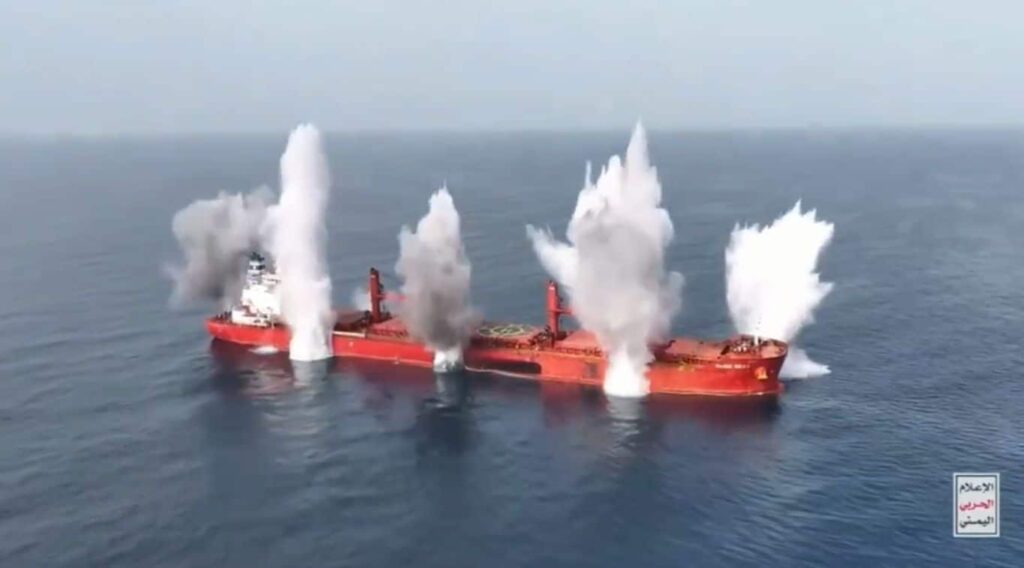
As of yesterday, twenty‑five tankers have changed course and are now racing toward Yanbu. But the backdoor route through the Red Sea comes with its own traps. First is the Strait of Bab el‑Mandeb — one of the Dire Straits — a narrow, twenty‑mile‑wide gate that every VLCC must squeeze through. Before a VLCC can even enter the Red Sea, it must execute a slow, wide turn to align with the northbound lane, and with an escort alongside, the strait effectively becomes one‑way traffic. It’s an asymmetrical passage in every sense: massive ships carrying 2.5 million barrels of crude forced through a confined physical corridor while small, land‑based actors hold the ability to disrupt commercial flow. And now the Houthis, regrouping and openly declaring that any vessel is a target, have reintroduced the threat at the very pivot where the Arabian Sea becomes the Red Sea. Like the Strait of Hormuz, there is only one way out. The Red Sea is long but not wide, and it is now crowded with commercial traffic, naval escorts, and the USS Gerald R. Ford — a 100,000‑ton carrier battle group occupying the same narrow lane the tankers need to transit. What looks like open water on a map is, in practice, a single‑lane system under stress.
The Basin Effect: Nowhere to Go
And to complete the trap, the port facilities at Yanbu introduce their own layer of vulnerability. The entire westbound evacuation system depends on a handful of berths, storage tanks, and loading arms concentrated in a tight footprint along the shoreline. In a region where non‑state actors have already demonstrated the ability to disrupt commercial shipping, any renewed threat — even the perception of one — forces insurers, operators, and naval escorts to reassess risk instantly. A single pause in loading, even for precautionary reasons, strands every tanker already inside the Red Sea. With Suez commercially closed to northbound traffic and Bab el‑Mandeb under pressure from the south, the ships that do make it through the strait find themselves in a basin with no alternate exit. The system doesn’t need a dramatic event to seize up; it only needs hesitation. And once hesitation sets in, the trap is fully formed.
The Horseshoe: A System That Has Nowhere Left to Breathe
An effective horseshoe has now formed across the region. Tankers, container ships, and bulk carriers are now stuck at every point of the compass — some locked in the Red Sea basin with no exit, others locked out and stacking across the Arabian Sea. What began as a barrels‑per‑day problem has now become a humanitarian nightmare in the making. The Gulf nations are among the world’s largest producers of fertilizers, shipped globally ahead of planting season; those shipments will not make it in time. A clutch metal — aluminum — is also tightening the noose. Two of the world’s largest smelters are going cool, with processed aluminum unable to get out and the feedstock to make it unable to get in. Once a smelter goes cold, it takes months and millions of dollars to reheat, meaning this is not a temporary disruption but a structural break. And transversely, the supplies that sustain the region’s population — millions of residents and more than twenty‑four million contract workers — are thinning fast. Access to potable water, food staples, and even basic household goods is already under pressure. The maritime trap is no longer just a shipping story; it is a cascading systems story with human consequences.
The Spider Web: A Global System Unraveling
Think of the entire system now as a spider web pulled apart at the center. While the Red Sea and Gulf are seizing up, supply chains across the world are becoming increasingly convoluted. The flow is broken at the heart, and even when the joint U.S.–Israeli aerial campaign eventually winds down, it will be too late for the system to realign between what is and what isn’t. The damage is already baked in. Many will suffer not just from cost, but from living conditions that may soon become unbearable for those trapped inside the Gulf. Fertilizers that normally move from the Gulf to the world’s growing regions will not reach the fields in time, meaning the fall harvest will not materialize. And the industrial layer is cracking as well: aluminum — a clutch metal for everything from construction to packaging — is now in short supply as two of the world’s largest smelters go cool. Processed aluminum cannot get out, and the feedstock to make it cannot get in. Once a smelter goes cold, it takes months and millions to reheat, turning a temporary disruption into a structural break. Meanwhile, supplies for the region’s population — millions of residents and more than twenty‑four million contract workers — are thinning fast. Access to potable water, food staples, and basic household goods is already under pressure. The spider web is no longer holding; the strands are snapping in every direction.