Metals, Fuels, & Flows
Follow the Flows, not the Headlines
Issue #1: Venezuela’s $100B Startup Fee
Tier 1: The Port — China’s Pre‑Fab Power Play
The story doesn’t begin with a U.S. policy shift. It begins at the waterline, where the only actor with the industrial muscle to resurrect a dead port at scale is China Inc. The U.S. can finance, convene, and encourage — but it no longer manufactures the physical systems required to bring a port like José back from collapse.
Worldwide Modular Buildouts
While Washington talks about “unlocking investment,” Beijing is already mobilized. China Inc. doesn’t repair ports; it manufactures them. Entire berths, pumping stations, power modules, and loading arms are built in controlled factory environments, shipped as pre‑fabricated units, and installed like industrial kit.
This is not construction. It’s deployment.
The “Lego Protocol”
To solve the two‑way flow problem — getting naphtha in so the heavy crude can get out — you need a turnkey, modular overhaul. Only China currently has the industrial speed to bypass the decay curve before 135 million barrels of inventory harden into 135 million tons of unpumpable tar.
The U.S. can talk about governance and sanctions relief.
China can show up with dredgers, cranes, prefab modules, and 5,000 workers.
That’s the asymmetry.
Tier 2: The “Soprano Protocol” & The Ivanhoe Fortress
Washington keeps insisting Venezuela is “safe enough” for private investment but refuses to provide the security architecture that would make that true. That leaves companies operating inside a human landscape that behaves less like a nation‑state and more like a network of local authorities. You don’t erase them. You don’t bypass them. You work with them, or the system collapses.
The Soprano Protocol — Working the Muscle
In Venezuela, the pro‑Maduro groups, colectivos, and local bosses are not obstacles; they are the operating environment. Trying to “eliminate” them only triggers conflict. The only workable model is the one every serious operator eventually accepts: you cut them in, or they shut you down.
Like Tony Soprano and the Feds, there’s a grudging recognition that the “local boss” is the only actor who can keep the roads open, the labor stable, and the logistics predictable. If they aren’t part of the system, the system doesn’t run.
The Ivanhoe Ministate — The Only Proven Blueprint
Robert Friedland already solved this problem in the Copper–Cobalt Belt. Ivanhoe didn’t wait for the state to provide security, power, water, or governance. They built a self‑contained ministate:
• Their own power
• Their own water
• Their own clinics
• Their own housing
• Their own logistics corridors
• Their own private security
And they did it with the local authorities, not against them.
That’s the blueprint for Venezuela’s first $100 billion:
build a fortress bubble that can operate independently of the national grid, the national security forces, and the national politics — but in alignment with the local power brokers who actually control the terrain.
Tier 2.5 — The U.S. Security Paradox
Washington made the right call by refusing to provide U.S. security forces for Venezuela’s oil system. It wasn’t just cost avoidance or political caution — it was an understanding, whether explicit or instinctive, that American security would break the very system the Administration claims it wants to restart.
The Paradox
U.S. forces on the ground would trigger the same chain reaction seen in Iraq, Libya, and parts of West Africa:
• U.S. presence → political backlash
• Backlash → local resistance
• Resistance → shutdown of roads, ports, and corridors
• Shutdown → collapse of uptime The system would fail faster with U.S. boots on the ground than without them
Tier 3: The Reality Check (Darren Woods)
Exxon CEO Darren Woods is the only actor telling the whole truth: Venezuela is uninvestable. Not politically unready. Not “high‑risk.” Not “challenging.”
Uninvestable.
Woods has lived the consequences. Exxon had its Venezuelan assets seized twice. Arbitration awards remain unresolved. And the legal and commercial frameworks that govern upstream investment are still the same structures that triggered those seizures.
The Stance
Woods’ position is not ideological — it’s operational:
• No durable legal protections
• No enforceable contracts
• No credible commercial framework
• No functioning national partner (PDVSA)
• No guarantee that capital deployed today won’t be expropriated tomorrow
Until the hydrocarbon laws are rewritten and the investment protections are real, no major will sanction long‑cycle capital. Not Exxon. Not Chevron. Not Total. Not BP. Not Shell.
Woods is the only one saying out loud what every boardroom already knows:
You cannot rebuild a system that still has the same legal DNA that destroyed it.
Conclusion — The Bright Spots That Aren’t
The Administration is selling a $100 billion “rebuild,” Chevron is selling “momentum,” and the headlines are selling “bright spots.” But none of them are telling the full story of the system they’re trying to resurrect.
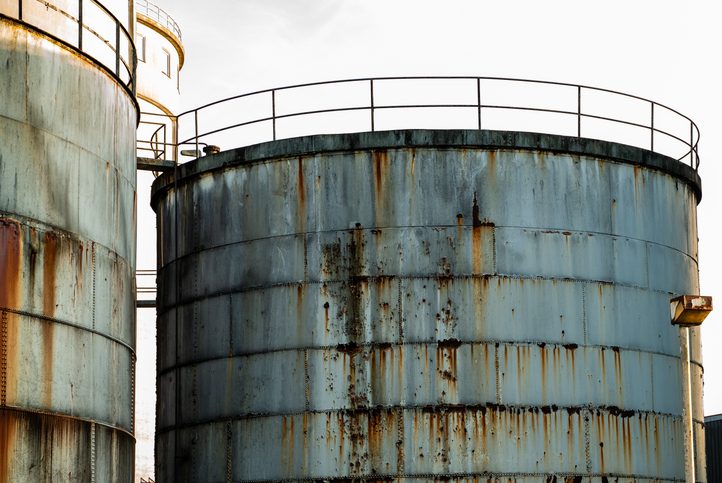
Chevron’s public framing focuses on production, not exports. They highlight “up to one million barrels over the coming months,” but leave out the physical choke point that makes that number meaningless: the two‑way flow at José is still frozen. No naphtha in means no heavy crude out. No circulation means the 135 million barrels in storage continue their slide toward sludge. And no functioning port means the 303 billion barrels underground remain exactly where they’ve been for 30 years — stranded behind rust, corrosion, and chemistry.
The bright spots are narrative.
The constraints are physical.
And the only actors with the industrial speed to break that deadlock — the only ones who can manufacture ports, deploy prefab pumping systems, and rebuild a two‑way flow before the oil turns to tar — are not the ones Washington is pointing to. They’re the ones already operating globally at scale: China Inc.
Meanwhile, the human terrain remains unchanged. The Soprano Protocol still governs the roads. The Ivanhoe Ministate remains the only proven model for uptime in a fractured state. And Darren Woods is still the only executive saying out loud what every boardroom knows: without legal overhaul, security architecture, and enforceable protections, Venezuela is uninvestable.
